Ultimate Guide to Starting Personal Development Reading
AKA How to Start a Personal Development Reading Journey That Lasts
Table of Contents
You’re not lazy, and you’re not broken. You’re just tired of staring at a wall of self-help books, podcasts, “must-read” lists, and feeling like you should be a whole new person by yesterday. It’s a lot. No wonder you feel stuck before you even start.
Or maybe you have a stack of personal development books you’ve read that’s taller than Shaq, but your life hasn’t changed with the turning of the pages. It’s not your fault; we just need to tweak your approach a bit.

A personal development book journey is a gentle plan, not a race. You pick one good book (for you, not for “everyone”), read it at a realistic pace, pause to reflect, and you actually try small things from it in your real life. That’s it.
Not 30 books in 30 days, and not a new identity by next Tuesday (unless you’re in the witness protection program, in which case… maybe you should seek advice from the law enforcement folks who are helping you).
In this guide, we’ll walk through how to choose your first book, build a simple reading and reflection routine, and turn tiny insights into tiny actions that add up.
We’ll talk about how to stay consistent without burning out, even if you have a full-time job, kids, a social life, or all three. You can grow in a way that fits your busy, messy, very human life (hint: a lil better a lil bit at a time).
What Is a Personal Development Book Journey and Why Start One?
Think of a personal development book journey like a long, kind, slow conversation with yourself. It is not about fixing a broken person. It is about learning a little, trying a little, noticing how you feel, then repeating that over time. You know – getting a lil better every day (ish).

You are not signing up to be “in self-help mode” forever (even though I want to get better every day forever). You are just choosing to grow on purpose instead of by accident. Perhaps some of these reasons why to read personal development books will resonate with you.
At its core, a personal development book journey is:
- Ongoing learning, not one big push
- Small actions in real life, not just nice ideas in your head
- Gentle self-awareness, not harsh self-criticism
You pick books that speak to goals you care about, like better habits, increased confidence, improved focus with less mental clutter, or a stronger mindset when life is messy.
Good books can support your mental health in a light, practical way. They give you language for what you feel, and they offer tools you can test. If you want a sense of how powerful that can be, you might like this piece on the impact of reading on personal growth and mental health.
The point is simple: you read a bit, you try a bit, you learn about yourself as you go.

Reading for growth vs reading for entertainment
Both kinds of reading matter. You absolutely still get to binge fantasy novels or thrillers and enjoy every second. That is reading for entertainment. You finish the chapter, maybe feel something, then go back to your day.
Reading for growth feels different. You’re not just following a story; you’re collecting ideas you might actually use.
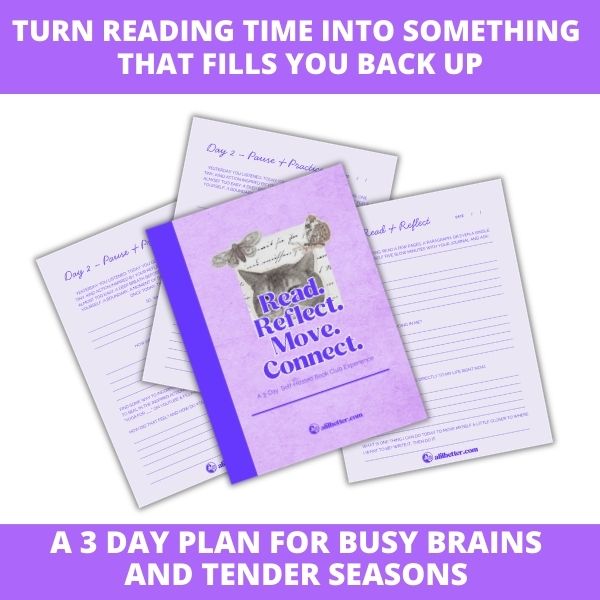
(Here’s a quick guide that can help with any book, by the way.)
For entertainment, you read to relax or escape. You read continuously, only stopping when your interest wanes or schedule forces you to, and then you close the book and move on.
You might remember your favorite characters or scenes, but not much changes in your daily life (unless it is an incredible book, in which case please tell me what it is so I can add it to my TBR).

Now, reading a personal development book for growth looks more like this:
- You pick it with a purpose:
Maybe you want to wake up less stressed, stop doom-scrolling at night, or feel more confident in meetings. You choose a book that speaks to that – like habits, focus, or confidence. - You pause while you read (and not just when life makes you):
You do not speed through. You stop at a paragraph that hits home and think, “Ouch, that is me,” or “Wait, I could try that.” - You take tiny notes, or write reflections in a journal:
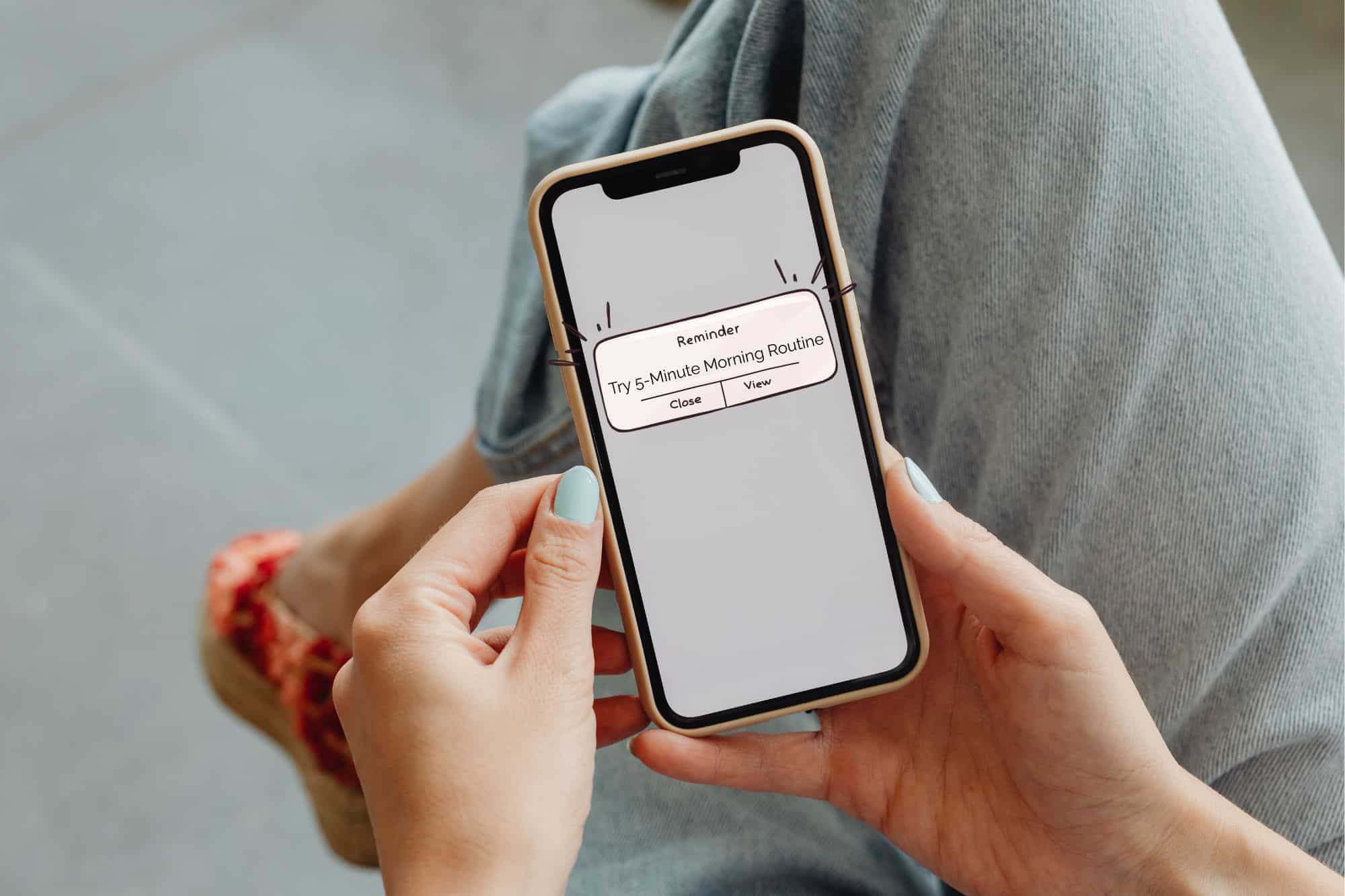
Nothing fancy. Maybe you highlight one line, jot a sentence in the margin, or keep a quick note in your phone:- “Try 5-minute morning routine.”
- “Phone in another room at night.”
- “Ask one deeper question when talking to friends.”
- You test one small idea in real life
Let’s say you are reading a habit book like Atomic Habits. You learn that starting tiny makes change easier. You don’t rebuild your entire life in a weekend. Maybe you try a 5-minute morning routine:- 1 minute to drink water, 2 minutes to stretch, 2 minutes to breathe & notice how you feel
- You notice what it does for you
Maybe you feel 5 percent calmer. Maybe you sleep a bit better. Maybe you’re less snappy with people. That’s growth – small, but real.

Reading for growth is slower, more intentional, and a little bit messier. You repeat sections, argue with the author in your head, and sometimes put the book down because you have a lot of feelings.
And that’s the point: you’re not reading to escape your life, you’re reading to upgrade it.

Real benefits you can expect from a personal development book journey
A personal development book journey isn’t magic. It won’t instantly turn you into a brand‑new person. But if you stick with it, even in a loose, “imperfect but still going” way, you’ll see some very real shifts.
Here are some realistic benefits to expect over months (not days):
Clearer goals
Instead of “I want to fix my life,” you start to say things like “I want to wake up with less anxiety,” “I want a workday that doesn’t feel like chaos,” or “I want to feel closer to my partner or friends.”
Books give you words, examples, and simple frameworks so your goals feel less foggy and more like, “Okay, I can actually try that.”
Better habits
You learn how habits work, then you experiment. You might try putting your workout shoes by the door, setting a 10-minute timer (or fun playlist) to clean instead of aiming for a whole spotless home, or reading five pages a night instead of “I should read more.” (And movement and yoga also help learning and personal development, so you can have whatever the opposite of a vicious cycle is here)!
The habits are small, but they stack. Tiny tweaks can slowly shift your days, which quietly shifts your life.

Stronger self-discipline (in a kinder way)
Discipline starts to feel less like yelling at yourself and more like keeping a promise to Future You. You might still procrastinate, still scroll, still binge. But you also learn to start sooner, come back faster after a slip, and use gentler self-talk.
More calm and mental space
Many personal development books include simple tools for stress and worry: breathing, reframing thoughts, and setting boundaries. Even one steady habit, like a 10-minute evening reflection, can give your mind a place to put all the noise.
Better relationships
When you understand yourself better, you get better at understanding other people. Books about communication, attachment, or emotional intelligence can help you listen with more patience, calmly say what you need, and eventually even notice your own patterns in conflict.
Even a small change, like pausing before you respond in a tense moment, can shift the whole tone of a relationship over time.

Feeling more in control of your life
Not in a “controlling every detail” way, but in a “I know what I am working on and why” way. You start to feel less like life is just happening to you and more like you are an active player in your own story.
All of this feels slow. It’s supposed to be slow. Think of it like compound interest on your effort. Tiny changes, repeated over months, quietly turn into big differences in how you show up.
Common myths that stop people from getting started
A lot of people never start a personal development book journey because their brain is yelling, “You are doing it wrong!” before they even open a page.
Let’s gently clear out a few myths.

Myth 1: “I have to read fast or I’m failing.”
You do not. In fact, reading slower is often better for growth. When you go slow, you let ideas sink in, have time to reflect, and actually try things, instead of racing to the end.
One thoughtful chapter a week can beat five rushed books in a month.
Myth 2: “I must finish every book I start.”
You’re not married to your books. Some won’t fit your season of life, your values, or your brain.
That’s fine. Life is too short to power through books that aren’t helping you somehow – whether that’s entertainment or self-improvement (though an ideal one will serve both)!
You can skim, skip chapters, or quit at any point your gut says, “I got what I needed”
You are building a journey, not a collection. There is even a growing conversation about how reading fewer self-help books more deeply works better than powering through hundreds, like in this honest take on self-improvement book overload.

Myth 3: “I need hours every day, and I don’t have that.”
You don’t need hours. You need pockets. (And that’s what this site is all about)
A personal development book journey can fit into ten minutes with your coffee, five pages before bed, one chapter on a commute, or a short audio chapter while you walk.
Even ten focused minutes with one helpful idea followed by one tiny action is enough to move you forward.
If you have believed any of these myths, you’re not alone. Many people feel weird or “behind” about personal growth, which is why some writers talk openly about common self-growth myths and how personal growth doesn’t have to look intense or perfect.

Get Clear on Your Goals Before You Pick Your First Book
Here is the sneaky reason a lot of self-help reading fizzles out: the book was never chosen for a clear reason. It just looked inspiring on TikTok or had a pretty cover. Then a few chapters in, your brain goes, “Why am I reading this again?” and you quietly drift away.
Getting clear on your goals does not have to be deep or dramatic. It just has to be honest. A tiny bit of clarity now will save you from forcing yourself through books that do nothing for the actual problems in your real life.
You are not trying to design your whole future. You are just answering a few simple questions about what would make the next few months feel better.
Ask yourself: what do I want to improve in my life right now?

Think short term. Not “Who do I want to be in 5 years?” More like, “What feels heavy or annoying this month?” or “Where do I keep saying, something has to change?”
Here are some common areas that personal development books focus on:
- Habits and productivity (getting things done without constant chaos)
- Confidence and self-esteem (feeling less insecure in your own skin)
- Money mindset (stress around spending, saving, or debt)
- Health and energy (sleep, movement, food, burnout)
- Emotional control (anger, anxiety, overreacting, shutting down)
- Relationships and communication (family, dating, friendships, coworkers)
- Purpose and direction (career confusion, “what am I even doing?” thoughts)
You don’t need to fix all of these – especially not all at once. Please do not try to. There’s a phrase “you can do anything, but not everything.” I like to add a caveat that you can, but one thing (ish) at a time.

Pick one or two issues that sting the most right now. That’s your starting point. If you like lists, you can pull ideas from something like this overview of personal development goal areas, then narrow it down to what fits your actual life.
Then write one short sentence for each area in your notes app or a messy notebook page:
- “I want to feel more focused during the week.”
- “I want to stop snapping at my kids when I am stressed.”
- “I want to feel less panic when I check my bank account.”
- “I want to feel more like myself again at work.”
Keep it simple and honest. You’re just naming the feeling and the situation. That alone already points you toward certain types of books and away from others.
Turn vague wishes into simple reading goals

“I want to get my life together.”
Don’t we all? But that is so vague your brain doesn’t know where to point the flashlight. Books will start to blur together, and you will feel like nothing is working.
So instead, you turn the big foggy wish into a simple, specific reading goal that a book can actually help with.
Here are some examples.
- Vague wish: “I want to get my life together.”
Simple reading goal: “I want to build a morning routine that makes workdays feel calmer.” - Vague wish: “I am tired of being behind in school.”
Simple reading goal: “I want to stop procrastinating on homework and study 30 minutes most days.” - Vague wish: “I am so tired all the time.”
Simple reading goal: “I want to fix my sleep schedule so I have more energy at work.” - Vague wish: “I suck at relationships.”
Simple reading goal: “I want to learn how to communicate better during arguments with my partner.”

Notice how each clear goal ties to:
- A feeling (less stress, more energy, more confidence)
- A situation (school, work, family, money, health)
That level of clarity makes book choices so much easier. If your reading goal is “build a morning routine,” a book on tiny habits is a good fit (or you could be even more direct – like a book on morning routines). If your reading goal is “argue better with my partner,” you will look for a book on communication or attachment, not productivity.
If you want more ideas to spark your own goals, it can help to skim lists like these personal development goal examples, then translate them into your own words, for your own life.
Try this little formula in your notes:
“I want to feel [emotion] in [situation], so my reading goal is to learn how to [simple action].”
For example: “I want to feel calmer during workdays, so my reading goal is to learn how to plan my week in 15 minutes on Sunday.”

Decide how much time you can honestly give to reading
Here is the part where we tell the truth to ourselves.
You do not need a 2-hour reading ritual with herbal tea and perfect lighting (but if you have that, can I come over sometime?). You need a block of time that fits your actual life, on your actual tired days, not your fantasy “new me” days. You know – the schedule that belongs to the real you, not aspirational you who’s already pretty perfect.
Pick one realistic starting point:
- 10 minutes a day
Great if you already scroll your phone in bed or while eating. You can swap one of those mini-scrolls with a mini-reading session. - One chapter every 2 or 3 days
Helpful if chapters are short or your days are uneven. You might read on your commute, during lunch, or while waiting at kids’ activities. - 30 minutes on weekends
Good if weekdays are slammed. You treat reading like a small weekly check-in with yourself.

The goal is small and steady, not heroic and random. One short, boring, consistent habit will beat “I read for 3 hours once and then forgot about it for a month.”
To make it stick, tie reading to something you already do:
- After breakfast, before you open social media
- On the bus or train, instead of scrolling
- While you drink your afternoon coffee
- In bed, right before sleep, instead of one more episode
You can even set a simple rule: “When I sit on the couch with coffee in the morning, I read five pages.”

Once your time block feels normal, you can always add more. But for now, pick a tiny slice of time, write it down, and let that be enough. Your future reading self will be very grateful you kept it realistic. And who knows – maybe you’ll overdeliver and pleasantly surprise yourself? That’s definitely better than burning out!
How to Choose the Right Personal Development Book as a Beginner
Let’s be honest: half the stress of self-help is just choosing a book. You open a book list & suddenly every title is “life-changing,” “must-read,” or “the only book you’ll ever need.” No wonder it feels safer to scroll the newsfeed or fyp.
You do not need the perfect book. You just need a book that fits your right now life: your energy, your attention span, and the one main thing you want to work on first. Think “comfortable first step,” not “forever soulmate book.”
Here is how to keep it simple and actually pick something you will read, not just admire on your nightstand.

Match the book topic to one main life area you want to grow
You already did the hard part earlier: you picked a main area of life that hurts the most right now. This is where most people get stuck, because every book promises to fix everything. That is how book FOMO starts.
Here is the truth: one book cannot fix your entire life. It can support one area, give you a few tools, and help you build a little momentum. That is more than enough.
Use your main goal as a filter:
- If your goal is better habits or routines
Look for books about habits, tiny changes, or daily systems. Something like Atomic Habits (you can peek at it here: Atomic Habits on Amazon*) works well because it stays practical and focuses on small steps. - If your goal is less stress and anxiety
Aim for simple books on mindfulness, nervous system tools, or basic mental health skills. Key words to watch for: “calm,” “simple practices,” “everyday stress.” - If your goal is confidence or self-worth
Choose books that are about self-talk, boundaries, or people-pleasing. You want real stories and gentle tone, not “fix your mindset or stay stuck forever.” - If your goal is focus and productivity
Pick something on attention, deep work, or basic planning, but still in normal language. No complex systems you know you will drop in a week.

The rule is: one book, one main area. When you catch yourself thinking, “Maybe I should also grab a money book, and a trauma book, and a relationship book,” notice that as FOMO talking. You are not behind. You are just overloaded.
Let your first book sit like a pilot project. You can always add a new topic once you have finished (or gotten what you needed from) this one.
Use trusted reviews, but trust your own curiosity first
Reviews can help, but they can also turn into a black hole where you “research” for three weeks and never read a single page. The goal is to use reviews as a filter, not as a way to outsource your entire decision.
You can also scan personal lists where someone talks about which books actually helped them in real life, not just which books are popular. This kind of honest list is helpful: 7 Best Self-Improvement Books That Changed My Life. When you read through something like that, notice which titles make you think, “Oh, that sounds like what I need.”
But here is the key part: not every popular book is right for you. Your brain, your history, your season of life, your time limits, all of that matters.
So, once you have narrowed it down to two or three options, pause and ask yourself which book excites you most and matches your current energy. Your quiet curiosity is a better guide than any five-star rating.

Sample the book before you commit to reading it fully
You do not have to “marry” a book at the bookstore counter. Think of the first contact as a low-pressure first date. You are just checking chemistry. I like using the app “Blinkist,” which provides brief summaries in audio or text form.
Here is a simple test:
- Read the introduction
Notice how the author talks to you. Do you feel judged or understood? Does the author explain the main idea in a way that makes sense, or do you feel like you are already behind? - Read one random chapter
Don’t overthink it, just flip somewhere in the middle and start reading. Ask yourself:- Is the language clear?
- Are there practical steps or only big ideas?
- Can I imagine finishing this chapter on a tired Tuesday night?
If both the intro and that random chapter feel clear, interesting, and at least a little bit helpful, that is a strong sign this book is a good first pick.

If you feel confused, bored, or heavy, you are allowed to put it back. No guilt. The right book for you right now will feel like, “Okay, I can do this,” not “I need a PhD and three days off to handle this.”
Choosing the right book saves time and protects your motivation. When your first experience with personal development reading feels doable and kind, you are much more likely to keep going, finish the book, and actually try the exercises.
And that is the whole point of this journey: not to collect impressive titles, but to find one quiet book that fits your life and helps you take your next small step.
Create a Simple Reading Plan You Can Actually Stick With

This is where your personal development book journey stops being a nice idea and starts being an actual part of your week. Not a life overhaul. Not a strict boot camp. Just a light, honest plan that fits your real life and survives your busiest days.
Think of it like setting up “training wheels” for your reading habit. We want you to feel small wins, not pressure.
Set a small, clear reading target for your first month
Your first month is not about finishing a huge stack of books. It is about proving to yourself, “Hey, I actually show up for this.”
So keep your target tiny and boring on purpose. Like ten pages a day, five days a week, or three chapters per week, or fifteen minutes on weekdays. Choose one, then say it out loud.
Then sanity check it:
- Could you do this even on a tired day?
- Would this still feel possible during a busy week at work or school?
- Does it feel almost too easy?

If it feels a little too easy, you are in the right zone. Remember, your first goal is to build the habit, not become the most productive reader on the internet.
Once you pick your target, make it visible. Your brain is forgetful and also very dramatic, so you need gentle reminders.
Ideas:
- Write your target on a sticky note and slap it on your nightstand.
- Make it your phone wallpaper for the month.
- Add it to your planner at the top of each week.
- Put a tiny note on your bathroom mirror.
You can even write it like a mini promise: “For the next 30 days, I’m the person who reads 10 pages a day.” Even better – you can have a friend join you for accountability.

If you like nerding out on ideas about reading habits, guides like How to Build a Reading Routine (And Stick to It) give more structure, but you do not need anything fancy to start. One tiny, clear target is enough.
Build a personal reading ritual that feels enjoyable
Now you have a target. Next step: make it feel like something you actually look forward to, not another chore on your self-improvement to-do list.
This is where a ritual helps. A ritual is just a small routine that tells your brain, “Hey, it is growth time now.”
Keep it simple and low cost. For example:
- A warm drink (tea, coffee, hot chocolate) that you only drink while reading.
- One specific chair, corner, or side of the couch that is your “reading spot.”
- Soft background music or a rain sounds playlist at low volume.
- A small lamp so you are not squinting under harsh overhead light.
- A blanket or hoodie that you associate with reading time.

Pick one or two of these and link them with your reading target, like “Every night at 9 p.m., I make tea, sit in the corner of the couch, and read 10 pages.”
You want your ritual to be repeatable on busy days, comfortable, and something you can do easily without a big set-up process. This is how you make a personal development reading habit.
Your brain loves patterns. When you repeat the same small steps before reading, it starts to treat this time like a habit loop. Over a few weeks, just sitting in that chair with that mug can make your mind slide into “focus mode” on its own.
If you find yourself resisting, try shrinking the ritual. No candles, no perfect playlist, just “sit in this chair, open the book, read 2 pages.” You can always add the cozy extras later.
Use simple tools to track your progress and stay motivated

Motivation tends to fade unless you can see that what you are doing matters. That is where tracking comes in. Not in a rigid way, just a “look at me actually showing up” way.
You don’t need a fancy app. Simple is better here.
A few easy options include a paper habit tracker or bullet journal, calendar with marks (or stickers! Who doesn’t love stickers?), note on your phone tracking pages or minutes read, or writing dates read on a paper bookmark!
What matters is that you can look back and think, “Oh wow, I have stuck with this for two weeks already.”
That visual streak is powerful. Articles like 19 Powerful Techniques to Build a Reading Habit talk about how seeing your own consistency makes you want to keep going, even when you feel blah.

Also, please celebrate tiny wins, including (but not limited to) finishing the first chapter, first week read streak, 100 pages read, or even reading on a day you didn’t feel like it.
Your celebration does not have to be huge. It can be:
- Telling a friend, “Hey, I really stuck to my reading plan this week.”
- Making a slightly fancier coffee.
- Taking a photo of your streak and saving it in a “wins” album (or sharing it online).
- Writing a one-line note: “I kept a promise to myself today.”
Tracking isn’t about pressure. It’s about proof that you are actually doing this in a quiet, steady way.
Adjust the plan if life gets busy (instead of quitting)

At some point, life will throw a week at you that laughs in the face of your reading plan. Extra shifts. Sick kids. Travel. A random emotional crash. Something.
This is where most people say, “Welp, I failed,” and drop the habit. You are not doing that.
You’re going to practice flexible discipline instead. That means:
- You keep the promise, but you let the size change.
- You miss a day, but you do not turn it into a story about being lazy.
- You adjust the plan, instead of quitting the whole thing.
Some backup options to keep in your pocket:
- The 5-minute rule
On chaotic days, your “reading session” is 5 minutes. Set a timer, read anything in your book, and when it rings, you are allowed to stop. It counts. - The weekend-shift plan
If weekdays explode, move more of your reading to Saturday or Sunday. For that week, your plan changes to: “30 minutes on Saturday and 30 minutes on Sunday.” - The commute swap
If your evenings fall apart, try moving reading to a bus ride, lunch break, or waiting time during kids’ activities. - The micro-goal day
When your brain is fried, your only target is: “Read 2 pages.” That is it. Often you will keep reading. But if not, those 2 pages still count.

When you miss a day, your script is simple: “Okay, that happened. I read again tomorrow.” No starting over from day one. No dramatic speeches about how you “always mess things up.”
If you notice that your original plan has felt heavy for 2 weeks in a row, treat it like a test result, not a verdict. Your life is giving you data.
Ask yourself if you need fewer days, smaller page limits/minute targets, or maybe if you need to change what time of day you read.
Then rewrite your target so it matches your real schedule. For example, you might move from “10 pages every day” to “10 pages, 4 days a week” or “one chapter on Monday, Wednesday, and Friday.”
This journey is long term. You are building a relationship with reading and with yourself. Of course the plan will change as your life changes.
If you keep the habit small, kind, and flexible, it has a much better chance of lasting longer than one burst of motivation. And that is where the real growth sneaks in, one small, slightly messy reading session at a time.

Go Beyond Reading: How to Apply Personal Development Books to Your Life
Here is the truth: you do not grow from the number of books you finish. You grow from the tiny, awkward, real-life things you try because of those books.
So this part of your journey is less about “being a reader” and more about becoming that person who quietly says, “Okay, let me test this today.” Small notes, small experiments, small reflections. That is where the whole thing starts to click.
Let’s make your books actually touch your life, not just your nightstand.
Take quick notes so you remember what truly matters

You don’t need a color-coded system or a Pinterest-worthy journal. What you do need is a way to catch the ideas that grab you before they float away with your next notification.
Think in terms of “low effort, high impact.” Options like underlining/highlighting lines that resonate or you want to try and maybe flagging them with sticky notes are good if you’re sure you’ll go back through the book, but I’d recommend a separate notebook, journal, or notes app page with anything you’d like to implement or reflect on.
In that notebook (or a notes app), you can use a super simple template:
- Big idea: What was the main point, in your words? (i.e., Start small so habits feel less scary.)
- How I can use this: One way it fits your real life. (i.e., Do 2 minutes of stretching before my shower.)
- When I will try it: A day or situation where you will test it. (i.e., Weekdays right after I brush my teeth at night.)

The key is to translate the book into your language. Copying long quotes looks pretty (and is time-consuming), but your brain learns better when you explain it to yourself in your own terms.
If you want more ideas on turning reading into action, there is a helpful guide on how to take action after reading a self-help book that shares simple, realistic tricks.
Think of your notes as a tiny map of “stuff worth trying,” not a perfect summary of the book.
Turn book ideas into tiny experiments in your daily routine

Reading is theory. Experiments are where you find out what actually works for your weird, lovely, specific life.
Here is the trick: shrink everything. Do not try to rebuild your whole schedule in one weekend. Pick one or two ideas and treat them like little science experiments.
A simple approach:
- Choose one idea from your notes
Something small that feels almost too easy. Examples:- A “2-minute rule” to start tasks.
- Three deep breaths before you open your email.
- Writing tomorrow’s top 3 tasks before you go to bed.
- Turn it into one clear action
Keep it tiny and obvious:- “When I sit at my desk, I set a two-minute timer and just start.”
- “Before a meeting or test, I close my eyes and do three slow breaths.”
- Use it for one week
Not forever. Just a one-week test. During that week, look for small shifts: less dread, more calm, slightly easier starts. - Review what worked and what did not
At the end of the week, ask:- Did I actually do it most days?
- Did it help, even a little?
- What would make it easier next week?

For example, you might discover the two-minute rule works great at your desk, but not at night when you’re on the couch. Fine. Move it to mornings and call that a win.
If you like more structure, some people use tips like the ones in My Tips To Make The Most Of Self-Help Books to keep experiments simple and focused instead of turning them into a new perfection project.
The important part is this: one or two ideas at a time. Not ten. Not the whole book. You are collecting evidence about what helps you, not trying to become the poster child for every method.
Reflect each week on what you learned and how you feel
A weekly check-in is where all the random pages and awkward experiments start to feel like an actual journey.
Keep it light. Ten minutes is plenty. I like Sunday, but any quiet pocket works.

You can use three simple questions:
- What did I read this week?
Just a quick recap in plain language. “I read a chapter about starting small habits and another about identity.” - What did I try?
List the tiny experiments, even if they were messy. “I tried the two-minute rule twice and did deep breathing before one meeting.” - What changed, even a little?
Look for small shifts:- “Starting work felt less heavy.”
- “I paused before snapping at my partner.”
- “I noticed my stress sooner, even if I did not handle it perfectly.”
This isn’t a report card. You’re not grading yourself. You’re just noticing.
You can jot your answers in a growth notebook, a weekly journal page, or a note on your phone called “weekly check-in.”

If you miss a week, you skip the guilt and come back the next one. That is it.
The magic of this step is that you start to see progress in effort and awareness, not just big results. You realize, “Oh, I actually pay attention to my reactions now,” or “I caught myself earlier than I would have last year.”
That is growth, even if your life still looks messy from the outside.
Know when to move to the next book in your journey
At some point, you’ll feel that quiet “I think I am done here” feeling with a book. That doesn’t mean you failed or that the book was bad. It usually means you got what you needed for now.
A few signs it might be time to move on:
- You’ve finished the book, and your notes are mostly repeats.
- You tried the main ideas in at least a small way.
- You can sum up the core message in a couple of sentences.
- The book starts to feel like background noise instead of guidance.
- You feel more pulled toward a new question or topic.

You don’t have to squeeze every drop of wisdom out of a book before you “earn” the next one. If you have applied a few key ideas and your brain feels saturated, you’re allowed to say, “Okay, that was that chapter of my journey.”
When you choose the next book, ask yourself:
- What is the next most important goal for me now?
Maybe you started with habits and now you are more curious about anxiety, money, or relationships. - Do I want to go deeper on the same topic?
If a habit book helped a lot, you might pick another one that covers the same area with a different angle or level of detail.
Your journey will feel better if each book is a step, not a random spin. You’re not chasing the next shiny title; you’re asking, “What would support me best in this season?”
And if a book stops feeling helpful halfway through, here is your permission slip to put it down, keep the three ideas that did help, and move on. You’re building a life, not a reading list.

To Wrap It Up…
Your personal development book journey doesn’t need to be dramatic or perfect. It just needs to be honest. Get clear on one main goal, pick a book that fits it, set a tiny reading plan you can keep on your worst days, and then quietly test small ideas in your real life. That’s the whole recipe.
You don’t have to read fast, finish every book, or change everything at once. You only need to be gentle, curious, and a little bit consistent.
So here’s your next step: choose one area you want to feel better in, pick one book this week that speaks to it, and schedule your first 10-minute reading session today. That’s all you need to start. Best of luck, and happy reading and growing! I’d love to hear what you choose to begin with and how it serves you!
Please pin one of these images to your favorite reading Pinterest board!
Hello! I’m Mandie.
I’m glad you’re here!
I’m passionate about learning and getting a lil better every day, and sharing what I learn with others.
You can learn more about me here!